





Keyword use can quietly damage a good draft. A page may cover the right topic, answer the search query, and still feel awkward because the same phrase appears in every other line. Another page may read smoothly but mention the target term so lightly that the subject feels loose.
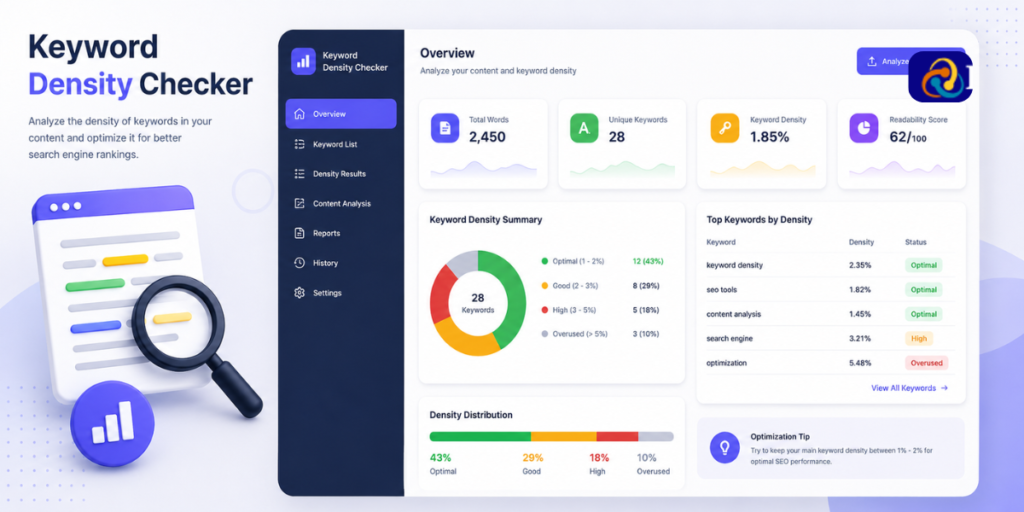
A keyword density checker helps catch that problem before the page goes live. It counts how many times a keyword appears against the total word count, then gives the editor a quick view of repetition. Rank Math defines keyword density as keyword appearances compared with the total word count, expressed as a percentage.
The tool does not decide content quality. It simply gives a warning when the writing starts leaning too hard on exact-match terms. A good seo keyword density checker should support editing, not turn the draft into a keyword-counting exercise. The real work still belongs to the writer: clearer structure, natural phrasing, useful information, and a page that answers the search properly.
Keyword Density Checkers in SEO Content Work
-
Frequency is only the first signal
Keyword density is a basic content check. If a keyword appears 20 times in a 1,000-word article, the density is 2 percent. The formula is simple, but the decision after that number is not.
A high percentage may mean the page is stuffed. It may also mean the topic naturally needs repeated wording. A recipe page, product category, medical explainer, or legal service page may need certain phrases repeated for clarity. This is why the number should be read with the sentence, heading, and user intent beside it.
A keyword density checker free tool can help during first edits, but it should never replace judgment. The tool points to repetition. The editor decides whether that repetition helps or hurts the page.
-
Repetition becomes visible during editing
Writers can miss repetition while drafting. After reading the same paragraph several times, repeated phrases begin to feel normal. A density report makes the pattern visible.
The issue is not only the main keyword. Two-word and three-word phrases can create the same problem. A blog repeating “best SEO tool” in every paragraph will sound stiff even if the main keyword density looks acceptable.
This is where a keyword density checker tool becomes useful. It gives a quick list of repeated terms, phrase frequency, and density percentage. The editor can then decide where to replace a phrase, remove a forced mention, or rewrite a sentence.
-
Density checks should support content quality
Density checks work best near the editing stage. Write the page first. Check the structure. Confirm facts. Review headings. Then check density to catch repeated wording.
This keeps the process sane. Writing around a target percentage from the start often creates stiff copy. A better draft uses the target keyword where it belongs, then relies on related terms, natural language, and clear explanations to carry the topic.
A density report should lead to better reading, not more keyword insertion.
Reading Keyword Density Without Turning It Into a Formula
-
Search engines need topical clarity
Keywords still help search engines understand the subject of a page. A page about dental implants, invoice financing, or app development should use the language people search for. Removing the main term completely can make the page vague.
The mistake is treating repetition as relevance. Modern SEO depends on intent match, complete coverage, page quality, internal structure, and the usefulness of the answer. Repeating a phrase cannot repair thin content.
A seo tool keyword density checker can show where the main phrase appears, but it cannot judge whether the page answers the query well. That check needs a human review of the search result, page type, and competing content.
-
Readers notice forced phrasing quickly
Readers may not know the phrase “keyword stuffing,” but they recognize awkward writing instantly. If the same term appears in every heading, sentence, and call to action, the page begins to sound like it was written for a crawler rather than a person.
This hurts trust. A user comparing clinics, software, lawyers, or financial services wants a clear explanation. Repeated keywords create friction. The page may still be indexed, but it will not feel useful.
A density checker helps catch this before publication. It gives the editor a reason to step back and ask whether the keyword still feels natural.
-
Density works better beside intent and coverage
A clean density score does not mean the page is strong. A page can have balanced keyword use and still miss the searcher’s main question.
Check the intent first. Does the user want a guide, service page, product comparison, pricing information, or local provider? Then check coverage. Does the page answer the core question with enough depth? Density comes after those checks.
The right order is simple: intent, structure, usefulness, then density.
Choosing a Keyword Density Tool Without Overchecking the Draft
-
Decide between live URL review and pasted-text checks
Some tools work better before publishing. Others are more useful after a page is live. Pasted-text checks help writers review a draft in Google Docs, WordPress, or another editor. URL checks help SEO teams review published blogs, service pages, and product descriptions.
SEO Review Tools supports both URL and pasted-text analysis. Its keyword density checker extracts word frequency and calculates density for one-word, two-word, and three-word phrase combinations.
This split matters during the workflow. Writers need draft checks. Auditors need live page checks. Agencies may need both, depending on the client setup.
-
Look for one-word, two-word, and three-word phrase reports
Single-word counts can be noisy. Common words appear frequently and add little value. Phrase-level checks are more useful because exact-match repetition often happens through two-word or three-word phrases.
A page may use the word “software” naturally. The problem begins when “best accounting software” appears too many times without variation. Phrase reports make that visible.
SEO Review Tools’ density checker works with one-word, two-word, and three-word combinations, which helps editors spot repeated exact-match patterns rather than staring at a long list of single words.
-
Choose a tool that matches your publishing workflow
Rank Math SEO belongs inside WordPress, which makes it useful for teams editing directly in the CMS. Its content analysis checks focus keyword presence in key areas such as title, meta description, and content fields.
Standalone tools work better when content is written elsewhere. Small SEO Tools allows users to enter a page URL or text for density analysis. WebFX also lets users check a URL or a block of text, with options to include areas such as meta tags and titles.
The right tool is the one your team will actually use during editing.
-
Avoid tools that push fixed keyword percentages
No universal keyword density percentage works for every page. A fixed target can make writers add keywords where they do not belong.
Use the checker as a warning light. If the phrase looks heavy, edit. If the phrase looks light but the page still reads clearly and answers the query, do not force more mentions.
The tool should protect readability, not turn the draft into a numbers game.
Quick Comparison of Keyword Density Checker Tools
A practical look at the tool options
| Tool | Best for | Main strength | Better fit |
| Rank Math SEO | WordPress editing | Focus keyword and on-page checks | Bloggers, WordPress teams |
| SEO Ranking Keyword Density Checker | Fast frequency review | Density percentage and keyword frequency | Editors, SEO reviewers |
| SEO Review Tools Keyword Density Checker | Phrase-level analysis | One, two, and three-word checks | Agencies, auditors |
| Small SEO Tools Keyword Density Checker | Simple free checks | Text or URL density review | Bloggers, small teams |
| WebFX Keyword Density Checker | Browser-based checks | URL or text input with page element options | Marketers, writers |
The comparison should not be read as a ranking list for every user. Rank Math SEO is better inside WordPress. SEO Review Tools is stronger when phrase-level repetition needs review. Small SEO Tools and WebFX work well for quick draft or URL checks.
Duplichecker is included later as a bonus option because it can help during fast editing rounds, although it is not part of the main five. No keyword density checker tool should decide the full SEO value of a page. It should help the editor find repetition before the reader does.
Rank Math SEO for WordPress Content Checks
-
Best used while editing inside WordPress
Rank Math SEO is most useful when content is written or edited inside WordPress. Instead of copying text into a separate checker, the writer can review focus keyword use while preparing the page.
This helps bloggers, publishers, ecommerce teams, and service businesses that rely on WordPress. The checks appear during editing, which makes them easier to act on before the page is published.
Rank Math also explains keyword density as a percentage of keyword use compared with total word count, and its broader content analysis works around focus keyword placement and on-page checks.
-
Focus keyword prompts help before publishing
Rank Math SEO can remind writers to review focus keyword usage in important areas. The value is not that every prompt must be followed blindly. The value is that the writer sees missing or repeated keyword use before the page is live.
For example, a product page may include the main term in the body but miss it in the SEO title. A blog post may repeat the keyword too heavily in subheadings. These are the kinds of issues a WordPress-based workflow can catch early.
-
Non-WordPress users may need a separate checker
Rank Math is not the best choice for every workflow. Teams writing in Google Docs, custom content systems, Shopify, Webflow, or static site editors may prefer standalone tools.
For those users, a seo keyword density checker that accepts pasted text or a URL may be faster.
SEO Ranking Keyword Density Checker for Fast Frequency Review
-
Useful when a draft needs a quick repetition check
SEO Ranking Keyword Density Checker works well when a draft needs a fast frequency review. The tool calculates how often keywords appear in the content and shows frequency with density percentage.
This makes it useful for editors checking whether a draft has become repetitive. A writer may not notice that the same service keyword appears several times in nearby paragraphs. A quick report makes the issue easier to catch.
-
Density percentage helps spot heavy keyword use
The tool gives a practical view of density. If the main term appears far more than expected, the editor can check whether the wording feels forced. If related terms are missing, the content may need broader language instead of more exact-match use.
The keyword density checker should not push the writer toward a target number. Its job is to highlight patterns that deserve a second look.
-
Broader SEO review still needs human judgment
A density score cannot tell whether a page deserves to rank. It cannot review intent, originality, factual quality, internal links, or competitor depth.
Use the report during editing, then read the page like a user. If the content sounds stiff, the density number already tells you where to start.
SEO Review Tools Keyword Density Checker for Phrase-Level Analysis
-
Strong for one-word, two-word, and three-word checks
SEO Review Tools Keyword Density Checker is useful when repeated phrases are the main concern. It analyzes URLs or pasted content, then extracts one-word, two-word, and three-word combinations before calculating density.
This helps because keyword stuffing often happens through phrase repetition, not single words. A page may use common words naturally but repeat one exact service phrase far too many times.
-
URL and text checks make it useful for audits
The tool can review both drafts and published pages. This is helpful during content audits, guest post reviews, and on-page cleanup.
An editor can paste a draft before submission. An SEO reviewer can check a live page after publication. Agencies can use the same tool during quick audits when they need a simple phrase-level snapshot.
-
Density data still needs readability review
SEO Review Tools Keyword Density Checker can reveal the pattern, but the edit still needs human judgment. A repeated phrase may be necessary in a legal, medical, or technical page. Another repeated phrase may sound forced after the second use.
The seo tool keyword density checker view should guide reading, not replace it.
Small SEO Tools Keyword Density Checker for Simple Free Checks
-
Good for quick draft or page reviews
Small SEO Tools Keyword Density Checker is useful when someone needs a fast density check without a heavy SEO platform. Users can enter text or a page URL, and the tool analyzes the density of the content.
This makes it practical for bloggers, small business owners, copywriters, and editors who want a quick review before publishing.
-
Pasted text and URL checks keep it accessible
The ability to use pasted text or a live URL makes the tool flexible. A writer can check a draft. An editor can review a published page. A small business owner can check a service page without opening a paid SEO suite.
The tool works well when the task is simple: find repeated words and phrases, then decide whether the content needs editing.
-
Better for basic review than full content strategy
Small SEO Tools is a checker, not a complete content strategy system. It will not decide search intent, SERP format, expert coverage, or internal linking.
Use keyword density checker free tools like this for quick editing support. For deeper planning, pair the result with SERP review and manual editing.
WebFX Keyword Density Checker for Clean Browser-Based Analysis
-
Helpful for marketers reviewing live pages
WebFX Keyword Density Checker is useful for quick web-based checks. Users can enter a URL or paste text to review keyword density. The tool also includes options for areas such as meta tags, titles, alt titles, and image-related elements where available.
This makes it useful for marketers reviewing live pages before a content update or after a new page has been published.
-
Text and URL input make quick checks easier
A tool that accepts both text and URLs saves time. A writer can check a draft before it reaches the CMS. A marketer can check a live page without copying the full text manually.
This is helpful for fast reviews, title checks, and visible keyword repetition. It also helps when a page has several SEO fields that may repeat the same exact phrase too heavily.
-
Best used before final editing decisions
WebFX Keyword Density Checker is most useful as a diagnostic step. It can show frequency and placement clues, but the final edit still depends on readability and intent.
A keyword density checker tool should tell you where to look. It should not decide how the sentence should sound.
Bonus Option: Duplichecker Keyword Density Checker
-
Useful for quick copy review
Duplichecker Keyword Density Checker can work as an extra browser-based option when a draft needs a fast review. Duplichecker offers several web-based SEO and text tools, which makes it a familiar stop for quick content checks.
It is useful for writers and editors who want a simple second check before sending a copy for review.
-
Works well before guest post or blog submission
A guest post, blog article, or service page can look fine during drafting but reveal repeated phrases during a density check. This tool can help catch that before the content reaches an editor, client, or publisher.
It should be used as a quick editing layer. The final review should still check tone, structure, usefulness, and factual accuracy.
-
Best kept as an extra editing check
Duplichecker should not replace a full SEO content review. Use it when speed matters and the draft needs one final scan for repeated wording.
How Linkmetrics Helps After SEO Content Analysis
-
Clean content is only the first step
A page can be well edited and still struggle to gain visibility. Keyword use may be balanced, headings may be clear, and the copy may answer the query, yet the page may lack authority or outside references.
This is where content analysis connects with off-page work. A clean draft is easier to promote because it gives publishers something useful to reference.
-
Guest posting works better after keyword balance is fixed
Linkmetrics can support the next step after on-page editing. It helps brands explore guest posting and link building opportunities connected to their niche and campaign direction.
Guest posting works better when the target page is already readable, useful, and free from keyword stuffing. Sending a poorly balanced page into outreach wastes effort. Fix the content first, then build authority around it.
-
Relevant publisher placements support stronger reach
Relevance should lead to the placement choice. A SaaS page needs technology or business publishers. A health page needs careful editorial placement. A travel page needs travel-focused sites. A local service page may need regional or industry-specific mentions.
Linkmetrics is useful after content analysis when a brand needs relevant backlinks and publisher visibility for pages ready to earn more reach.
Free and Paid Keyword Density Checker Tools
-
Free tools work for quick editing checks
Many density checkers are free to use. They work well for pasted-text checks, draft reviews, and published URL scans.
A keyword density checker free option is enough when the task is simple. Bloggers, editors, copywriters, and small businesses can use these tools before final edits.
-
SEO suites add workflow support
Paid SEO platforms and WordPress plugins may add stronger workflow value. Rank Math SEO works inside WordPress, which helps teams check keyword use during editing. Broader SEO suites may also include content recommendations, SERP review, and page optimization checks.
A free checker can find repetition. A larger SEO workflow can connect that check with structure, metadata, internal links, and search intent.
-
Choose based on how your team publishes
A WordPress team may prefer plugin-based review. An agency may prefer quick URL checks during audits. A writer may prefer pasted-text tools before submission.
The best seo keyword density checker is the one that fits the publishing process without slowing the editor down.
Using Keyword Density Checker Tools Without Damaging the Copy
-
Check density after the draft is complete
Do not write the first draft around keyword density. Finish the draft first, then check for repetition during editing.
This keeps the writing natural. A draft built around percentages usually sounds forced before the second paragraph.
-
Watch exact-match phrases, not just single words
Exact-match phrases create more problems than single words. A page can repeat “digital marketing services” too many times while the single word count still looks normal.
Two-word and three-word phrase reports are useful because they reveal repeated blocks of language.
-
Compare density with readability
A page can have a safe-looking percentage and still read badly. Read the paragraph where the tool flags repetition. If the sentence feels stiff, rewrite it.
Use synonyms, related terms, and clearer explanations instead of adding more exact-match keywords.
-
Review headings, metadata, and body copy separately
Keyword use in headings, title tags, meta descriptions, and body copy should feel deliberate. Repeating the same exact phrase in every visible area can make the page feel overworked.
Spread language naturally. Let headings carry meaning, not repeated keywords alone.
-
Treat density as a warning sign
Density should warn the editor, not control the writer. A checker can reveal overuse, but it cannot judge expertise, structure, or usefulness.
Use a keyword density checker as an editing aid. Use a keyword density checker tool to find problems, then rely on judgment to fix them.
Mistakes That Make Keyword Density Checks Misleading
-
Chasing a perfect percentage
There is no perfect keyword density for every page. Chasing a fixed percentage can ruin a decent draft.
A page should sound natural first. The percentage is secondary.
-
Ignoring search intent
A page can have clean density and still miss the query. If the user wants a comparison and the page gives a definition, density will not save it.
Intent decides the page type.
-
Counting only the main keyword
Related terms, synonyms, entities, and natural phrasing all help build topical clarity. Exact-match repetition should never replace proper coverage.
A strong page uses varied language.
-
Forgetting how the paragraph reads
Readers notice forced phrasing faster than tools do. If a phrase feels heavy, it probably needs editing.
The paragraph test is simple: read it once like a buyer, patient, student, or client. Awkward repetition becomes obvious.
-
Treating density tools as full SEO audits
Density tools check frequency. They do not review internal linking, page speed, schema, search intent, backlinks, expert input, or competitor coverage.
Use them as content checks, not SEO verdicts.
Picking the Right Keyword Density Checker for Your Workflow
-
Use Rank Math SEO for WordPress editing
Rank Math SEO works best for teams editing inside WordPress. It keeps keyword checks close to the draft.
-
Use SEO Ranking for fast density checks
SEO Ranking Keyword Density Checker is useful when an editor needs quick frequency and percentage data.
-
Use SEO Review Tools for phrase-level review
SEO Review Tools Keyword Density Checker is a strong pick when one-word, two-word, and three-word phrase checks are needed.
-
Use Small SEO Tools for simple free checks
Small SEO Tools Keyword Density Checker works well for quick pasted-text or URL analysis.
-
Use WebFX for quick URL and text analysis
WebFX Keyword Density Checker is helpful when marketers need a clean browser-based review.
-
Use Duplichecker for extra copy review
Duplichecker Keyword Density Checker can serve as one more quick check before content is submitted or published.
Conclusion
Keyword density checkers are useful when they keep content from becoming repetitive. Rank Math SEO works well for WordPress editing. SEO Ranking and SEO Review Tools help with frequency and phrase-level analysis. Small SEO Tools, WebFX, and Duplichecker are useful for quick checks.
Density should never become the full SEO strategy. A strong page still needs search intent, useful information, natural language, internal structure, and enough authority to compete.
Linkmetrics supports the next step after clean content by helping brands build authority through guest posting and link building.
Use density checks to improve balance. Let readers, intent, and topic quality decide the final copy.
FAQs
What does a keyword density checker review?
A keyword density checker reviews how many times a word or phrase appears in a piece of content. It can show frequency, density percentage, total word count, and repeated phrase patterns.
Which keyword density checker is best for SEO content?
Rank Math SEO works well for WordPress users. SEO Review Tools is useful for phrase-level checks. Small SEO Tools and WebFX work well for quick reviews. Duplichecker helps during final edits.
Can I use a keyword density checker free?
Yes, many tools offer free keyword density checks. They work well for drafts, blog posts, live URLs, and quick editing reviews before publishing or submission.
What keyword density percentage is safe?
There is no fixed safe percentage for every page. The keyword should appear naturally, support topic clarity, and avoid repeated phrasing that makes the copy sound forced.
Does keyword density still affect SEO?
Keyword use helps search engines understand the page topic, but density alone does not guarantee rankings. Intent match, content quality, structure, internal links, and authority carry stronger long-term value.
How does Linkmetrics help after content optimization?
Linkmetrics helps with guest posting and link building after a page has been cleaned up and optimized. It supports relevant publisher visibility for content ready to earn stronger off-page signals.